

Healing With Imagery
The body speaks in images
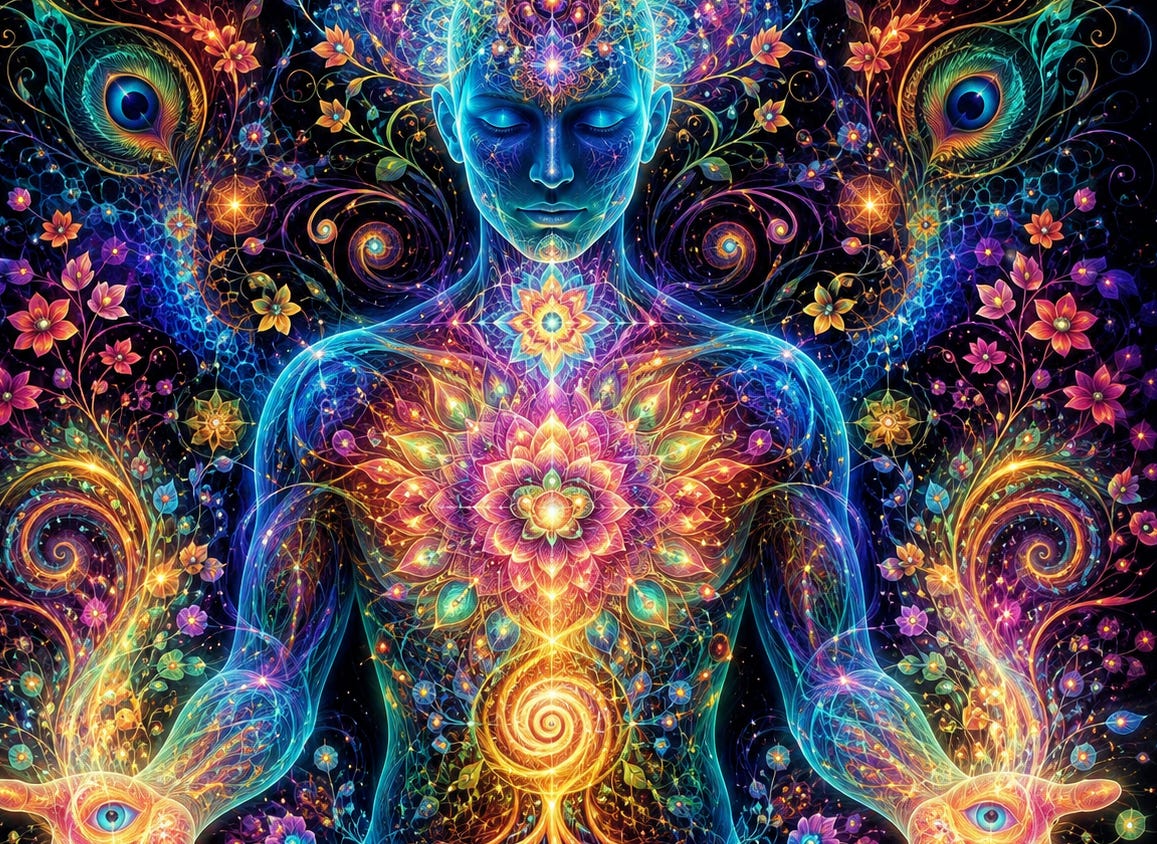
Images are one of the ways the body and mind communicate.
Long before modern medicine, human beings used images, symbols, ritual, dreams, and imagination in the healing process. Shamans, ancient healers, physicians, psychologists, and spiritual traditions have all understood that images can carry meaning, feeling, and healing energy.
Today, guided imagery continues that ancient conversation in a more conscious way.
When we work with an image, we are not “making something up” in the ordinary sense. We are allowing the imagination to become a doorway into the body, the emotions, and the unconscious. Sometimes the image that appears is surprising. Sometimes it is simple. Sometimes it is strange. But it may contain information we could not reach through ordinary thinking alone.
The body speaks in images
If you have a pain somewhere, you might try asking the painful area:
What is wrong?
The answer may not come in words.
It may come as a color, a shape, a landscape, an animal, a memory, an object, a temperature, or a sensation. The image may not be logical. It may not be what you expected. But it may give you a way to listen.
Images are one language of the body-mind.
They can help us approach what is difficult to say directly: pain, fear, grief, overwhelm, illness, anxiety, uncertainty, or the feeling that something in life needs attention.
Imagery and healing
Guided imagery has been used to support people through many kinds of healing experiences.
It may help a person prepare for surgery or medical treatment. It may help soften anxiety before an intervention. It may help someone feel more receptive and less overwhelmed when facing a diagnosis. It may help with relaxation, chronic pain, fear, or emotional distress.
This does not mean imagery replaces medical care.
It means imagery can support the person who is receiving care.
In my years as a physician, I saw again and again that healing is not only something done to the body from the outside. Healing also involves the inner life: fear, hope, trust, memory, grief, imagination, and the body’s own wisdom.
Guided imagery gives us a way to enter that inner landscape.
Active imagination
Carl Jung taught a related practice called active imagination.
In active imagination, a person may return to a dream image, inner figure, or symbolic scene and allow it to continue. Instead of analyzing the image from a distance, we enter into relationship with it.
For example, if a figure appears in a dream, you might imagine speaking with that figure.
What does it want you to know?
What does it need?
Where does it want to take you?
This kind of work should be approached with respect and care. It is not about forcing an answer. It is about letting the image unfold.
Dream images often carry information that is useful to us, even when we are not yet consciously aware of it.
Interactive guided imagery
Interactive guided imagery is different from listening to a recording.
A recording may guide you through a general relaxation or healing image. That can be useful. But interactive guided imagery happens in real time. It works with the images that arise from your own imagination, your own body, and your own inner wisdom.
The guide does not impose the image.
The guide helps you stay with what appears.
That might be a landscape, a room, a color, an animal, a person, a symbol, or a sensation. The image may change as you attend to it. It may speak through emotion, movement, memory, or metaphor.
The work is interactive because the image is alive in the moment.
It is not a script.
It is a conversation.
Why this matters
There are times when words are not enough.
We may understand something intellectually and still feel stuck. We may know what we “should” do and still feel unable to move. We may carry grief or fear in the body before we can explain it in language.
Imagery can meet us there.
It can offer a bridge between body and mind, conscious and unconscious, fear and trust, illness and healing, the known and the unknown.
Sometimes an image gives comfort.
Sometimes it brings a question.
Sometimes it shows us where we are hurt.
Sometimes it shows us the hidden strength that is already present.
A simple beginning
You can begin gently.
Close your eyes, if that feels comfortable. Let your attention move toward a place in the body, a feeling, or a question you are carrying.
Ask:
Is there an image here?
Then wait.
Do not rush.
You may see something, sense something, feel something, or simply notice a color or shape. Whatever comes, meet it with curiosity.
You do not need to understand it immediately.
You only need to listen.
Images can open doors that ordinary thought cannot. They can help us hear what the body knows, what the heart carries, and what the deeper self may be trying to bring into awareness.