

Life Transitions
Can Feel So Disorienting
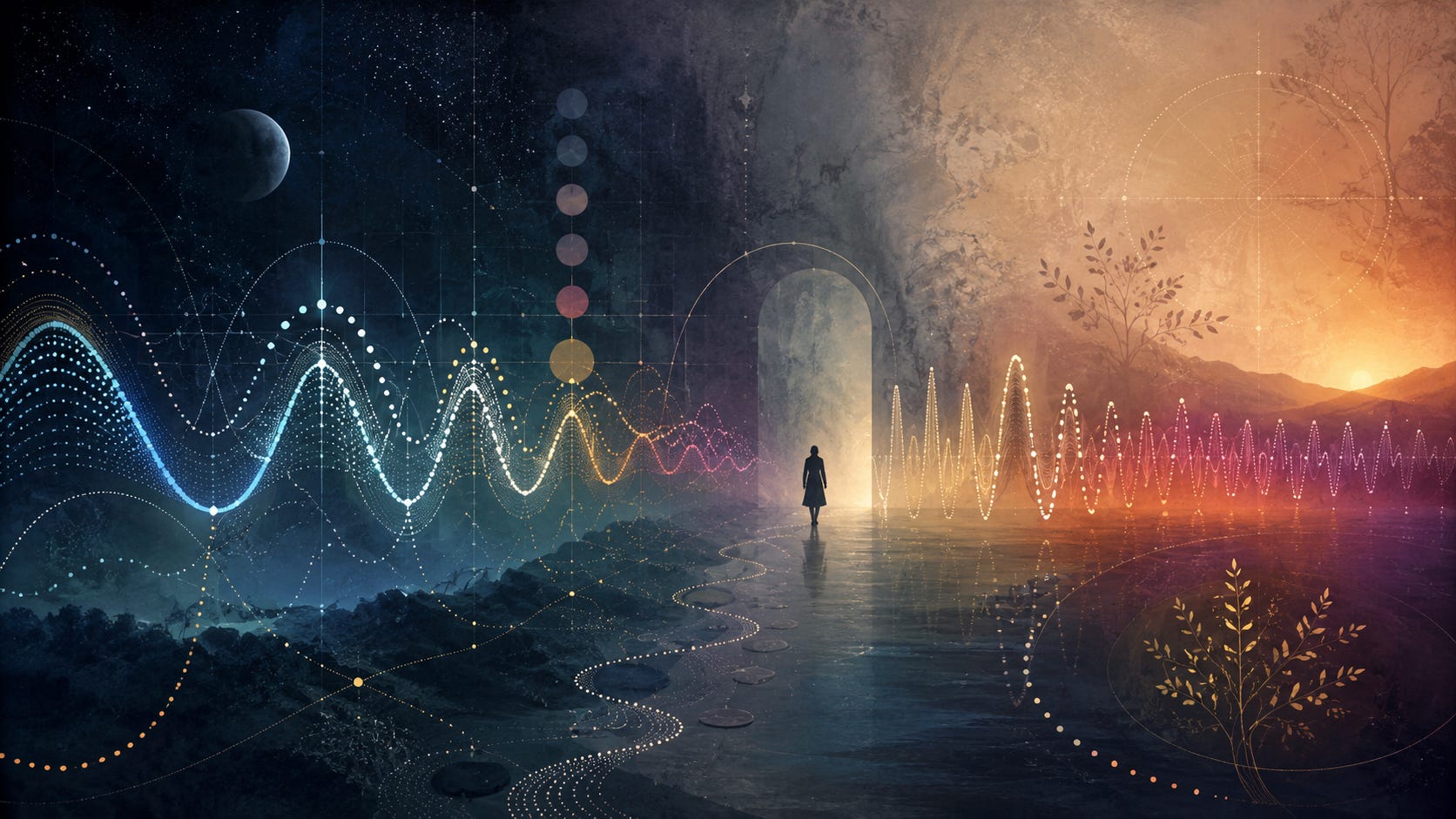
A life transition is not only a change in circumstance.
It can be a change in identity.
Retirement, grief, illness, caregiving, divorce, aging, an empty nest, or the death of someone close to us can change the shape of daily life. But often the deeper disruption is harder to name.
Who am I now?
What still matters?
What is ending?
What wants to begin?
What do I do with this new version of my life?
These questions may not arrive all at once. They may come quietly. They may appear in the middle of the night, in a dream, in a sudden memory, in a feeling in the body, or in the simple realization that the old way of living no longer fits.
When the old map no longer works
Most of us carry an inner map of who we are.
We know our roles, our relationships, our responsibilities, our routines. We know what is expected of us. We know how to move through the day.
Then something changes.
A career ends. A partner dies. Children leave home. A body changes. A diagnosis arrives. A caregiving role begins. A relationship shifts. A long-held identity no longer feels true.
The outer event may be clear.
The inner change may be much less clear.
This is why life transitions can feel so disorienting. We are not only adjusting to new circumstances. We may also be discovering that a familiar part of ourselves is ending.
And another part has not yet fully appeared.
Advice is not always enough
When we are in transition, people often offer advice.
Make a plan.
Stay busy.
Get out more.
Move on.
Be grateful.
Look at the bright side.
Sometimes advice helps. But often, a major life transition asks for something slower and deeper than advice.
It asks for space.
It asks for listening.
It asks for time.
It asks us to notice dreams, images, emotions, body sensations, memories, and longings that may have been waiting beneath the surface.
A transition may not be solved by deciding quickly what comes next. Sometimes the work is to stay close enough to the experience that the next step can reveal itself.
The in-between place
Transitions often place us in an in-between space.
The old life is no longer available in the same way. The new life has not yet taken shape.
This can feel frightening, lonely, or confusing.
It can also be a deeply creative place.
In Jungian work, these threshold moments matter. They may bring material from the unconscious into awareness. Dreams may become more vivid. Old memories may return. Images, symbols, or synchronicities may carry unusual energy. Emotions may appear that do not seem to match the surface situation.
These experiences are not interruptions.
They may be part of the transition itself.
They may be showing us what wants attention.
Aging and the inner life
Later life brings its own transitions.
Aging can ask us to meet limits, losses, and changes in the body. It can also ask us to reconsider what a meaningful life is.
When the outer world becomes less defined by work, productivity, achievement, or family roles, the inner life may become more vivid.
Dreams, memories, spiritual questions, creative longings, and old unfinished feelings may come forward.
This is not failure.
It may be an invitation.
The psyche may be asking for a different kind of attention.
Grief changes identity
Grief is one of the most powerful life transitions.
When someone we love dies, we do not only lose that person’s presence. We may lose a role, a future, a daily rhythm, a sense of who we were in relation to them.
Grief can make the world feel unfamiliar.
It can also make us unfamiliar to ourselves.
In grief, dreams may bring the dead close. Memories may become vivid. The body may carry sorrow in ways the mind cannot organize. Time may feel strange.
This is why grief needs more than explanation.
It needs tenderness, room, and witness.
The hidden door in transition
A life transition may begin with loss, confusion, or uncertainty.
At first, it may feel like a closing.
But sometimes, inside the closing, there is also a hidden door.
This does not mean the loss was good. It does not mean grief should be rushed or pain should be made meaningful too quickly.
It means that the psyche may still be moving.
Something within us may be trying to respond, adapt, deepen, or emerge.
The hidden door may appear as a dream, an image, a memory, a conversation, a new question, or a quiet sense that there is another way to live from here.
A different kind of support
Depth coaching offers support for this kind of inner transition.
It is not about forcing a solution from the outside. It is not about telling someone what their life should become.
It is a space to listen more deeply.
Through conversation, dreamwork, guided imagery, active imagination, and attention to the body’s wisdom, we can begin to notice what is ending, what is unresolved, and what may be trying to emerge.
Sometimes the next step is practical.
Sometimes it is emotional.
Sometimes it is symbolic.
Sometimes it is simply telling the truth about where we are.
A question to begin with
If you are in a life transition, you might begin with one quiet question:
What in me is asking for attention now?
You do not need to answer quickly.
You might carry the question into sleep. You might write it in a journal. You might draw an image. You might notice what memories, dreams, or feelings appear.
Life transitions can be disorienting because they ask us to cross from one way of being into another.
The crossing may take time.
But if we listen carefully, the in-between place may begin to show us a path.
And sometimes, where we thought there was only a wall, a hidden door begins to open.